


Equinox EV vs VW ID.4
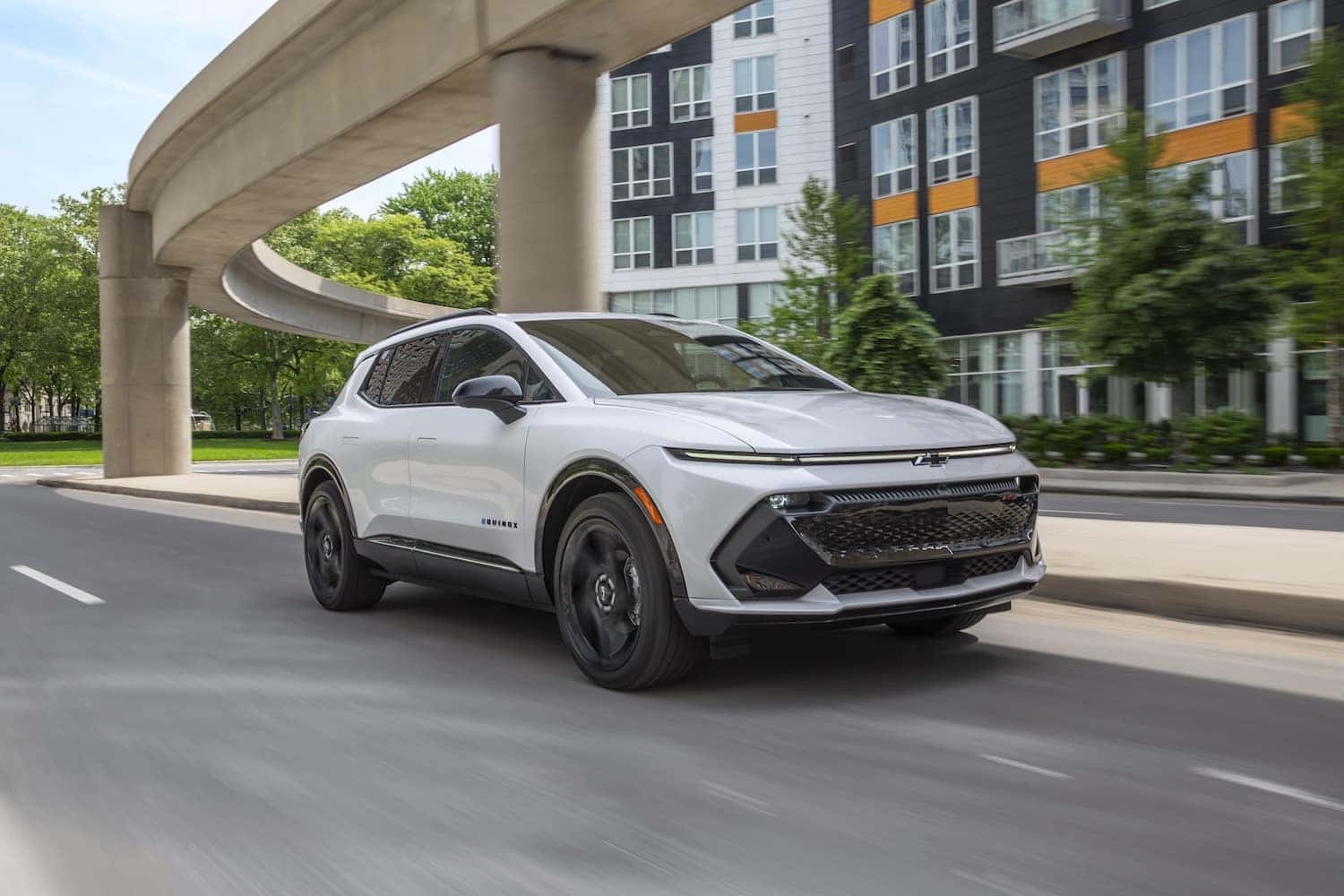
Battery electric vehicles have moved from science experiments on wheels to an environmentally conscious choice for average households. The two models here are aimed directly at the latter. The Equinox EV and VW ID.4 fall into the compact crossover category, the best-selling vehicle category in the U.S. It is a popular vehicle for adult singles, married couples, young families, and even empty nesters. Both will likely be their owner’s first EV, so how do they compare? Twin Falls Chevrolet provides some insight.
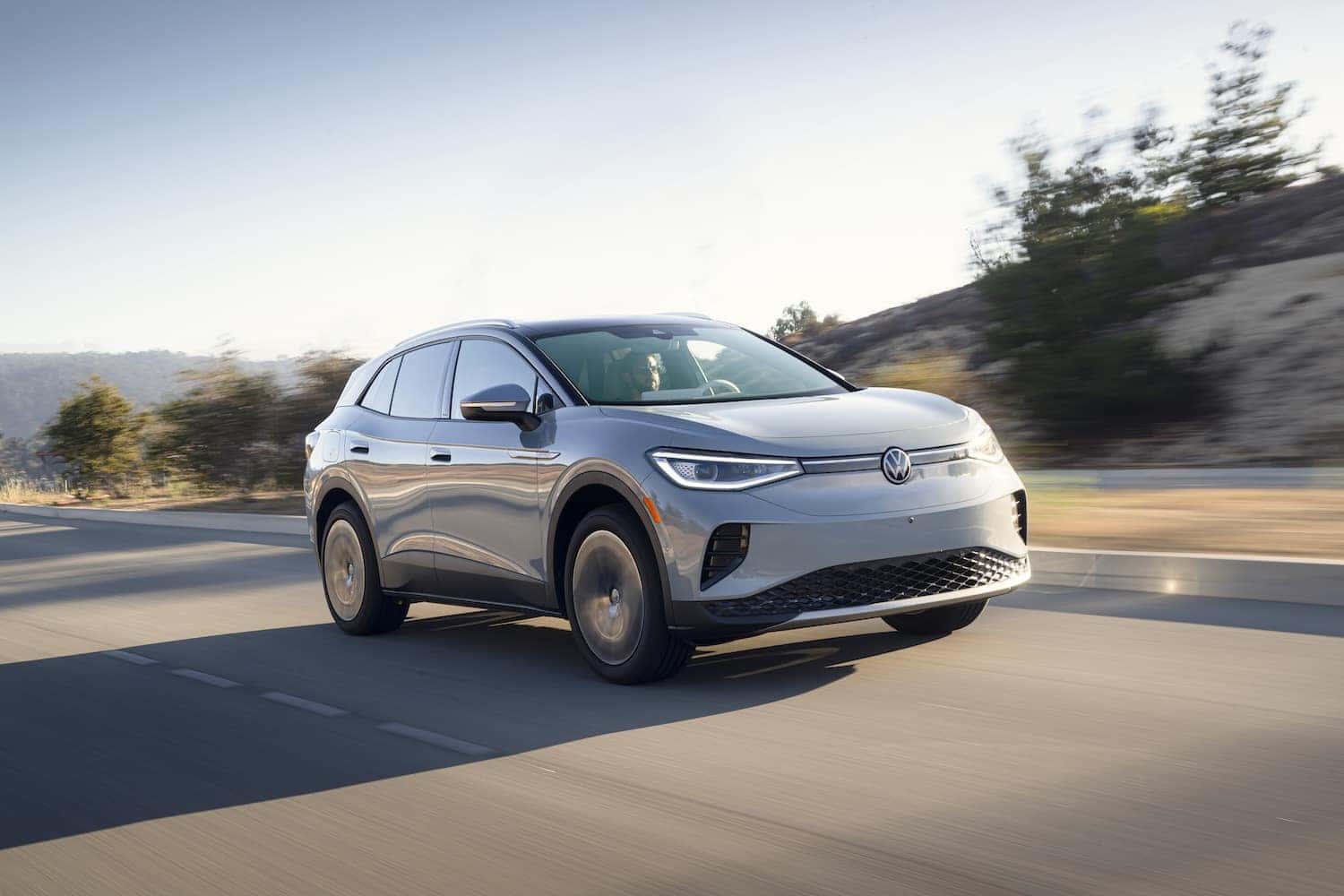
The ID.4 as EV Establishment
By EV standards, the ID.4 is an elder statesman, having first come out as a 2020 model. That is long enough to have had something of a mid-cycle refresh in the past year, though the model looks only slightly different from its debut. It contains an instrument panel as unconventional as its drivetrain, which turned out to be problematic. Its mid-cycle refresh was primarily an attempt to fix those issues, but some remain.
The Equinox EV is not an EV Equinox
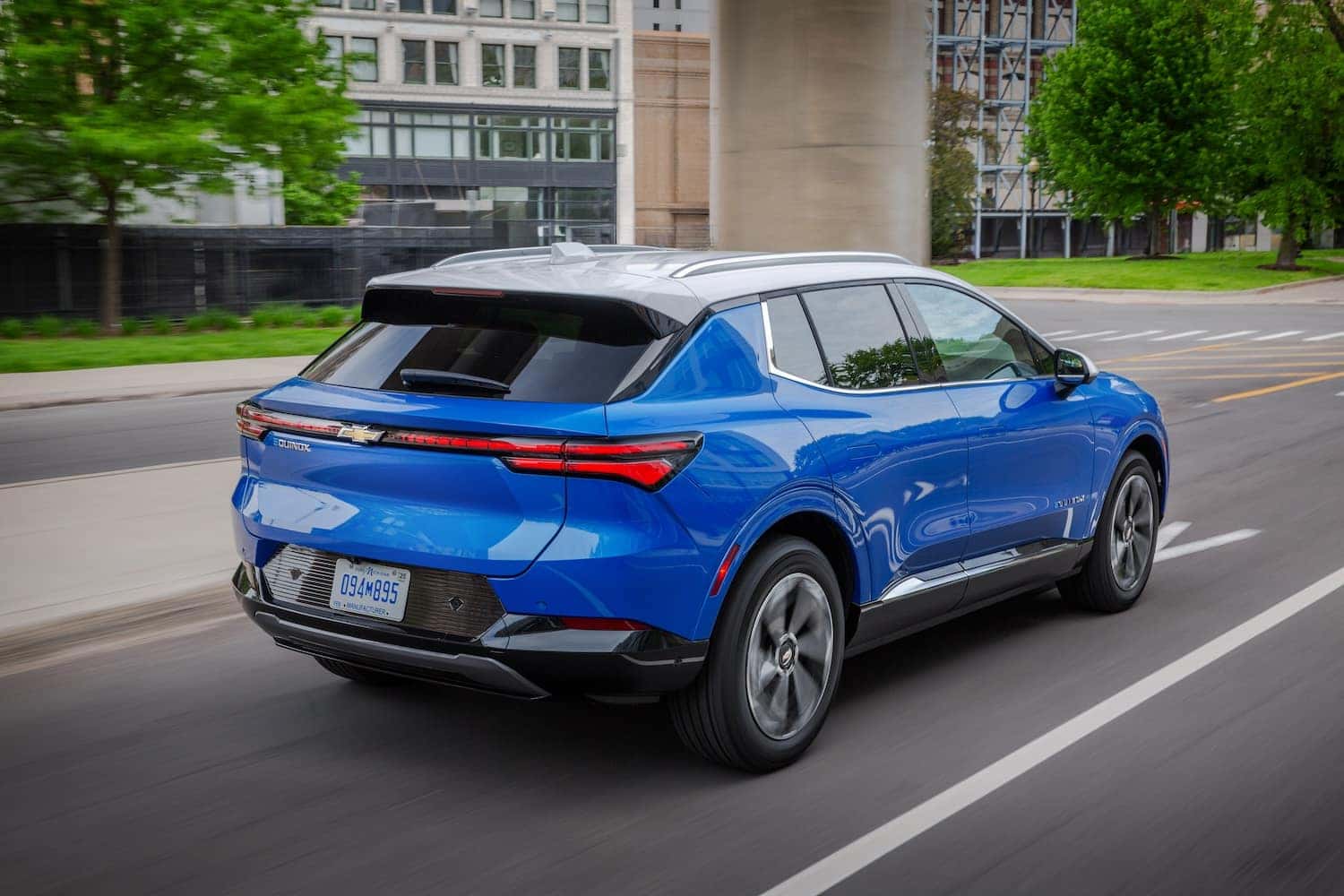
The Equinox EV, on the other hand, is entirely new. It came out late in 2024 and continues essentially unchanged as we head into the 2025 model year. While it shares its name with the conventional Equinox model, that is little more than Chevrolet giving you an instant read of the vehicle’s general size and type, just as it does with the Blazer EV. Other than the name and vehicle segment, Equinox shares little else with the conventional Equinox, having its own dedicated platform that is longer and wider, with a 116-inch wheelbase that is 8.8 inches longer than its namesake.
ID.4 Is Comparatively Smaller
The ID.4 is smaller in almost every metric. Its wheelbase and overall length are 7.5 inches and 10 inches shorter, respectively, and it is 4 inches narrower, though it manages to be 0.4 inches taller. It is a bit of a wash in cabin space. The Equinox has a front/rear passenger volume of 55/47 vs. 56/45 for the VW. However, the latter has an edge in cargo space, with rear seat up space of 26 vs. 30 cubic feet and a maximum cargo volume of 57 vs. 64.
Comparing capabilities
Like a conventional crossover, the Equinox is available in front-wheel and all-wheel drives. The ID.4 is available with rear-wheel drive or all-wheel drive. As is usually the case with EVs, where there are driving wheels, there is a motor in between, so the FWD Equinox EV has a motor in the front while the RWD ID.4 has one in the rear.
This being Minnesota, we will concentrate on the all-wheel drive models, which both models have a motor in the front and rear. The motors are small, so the rear motors don’t have much impact on the cargo area. The two motors in the Equinox EV produce a total of 288 horsepower and 333 lb-ft of torque. The motors are powered by energy stored in an 85.0 kWh lithium battery spread out under the floor between the two axles. It has an EPA-rated range of 285 miles, and Car and Driver tested its steady 75 mph highway range to be 260 miles.
The ID.4’s two motors produce 282 horsepower and 402 lb-ft of torque. The battery is smaller, at 77.0 kWh, resulting in a lower EPA range of 263 miles. Car and Driver’s 75 mpg highway range was 240 miles.
Feel Different on the Road
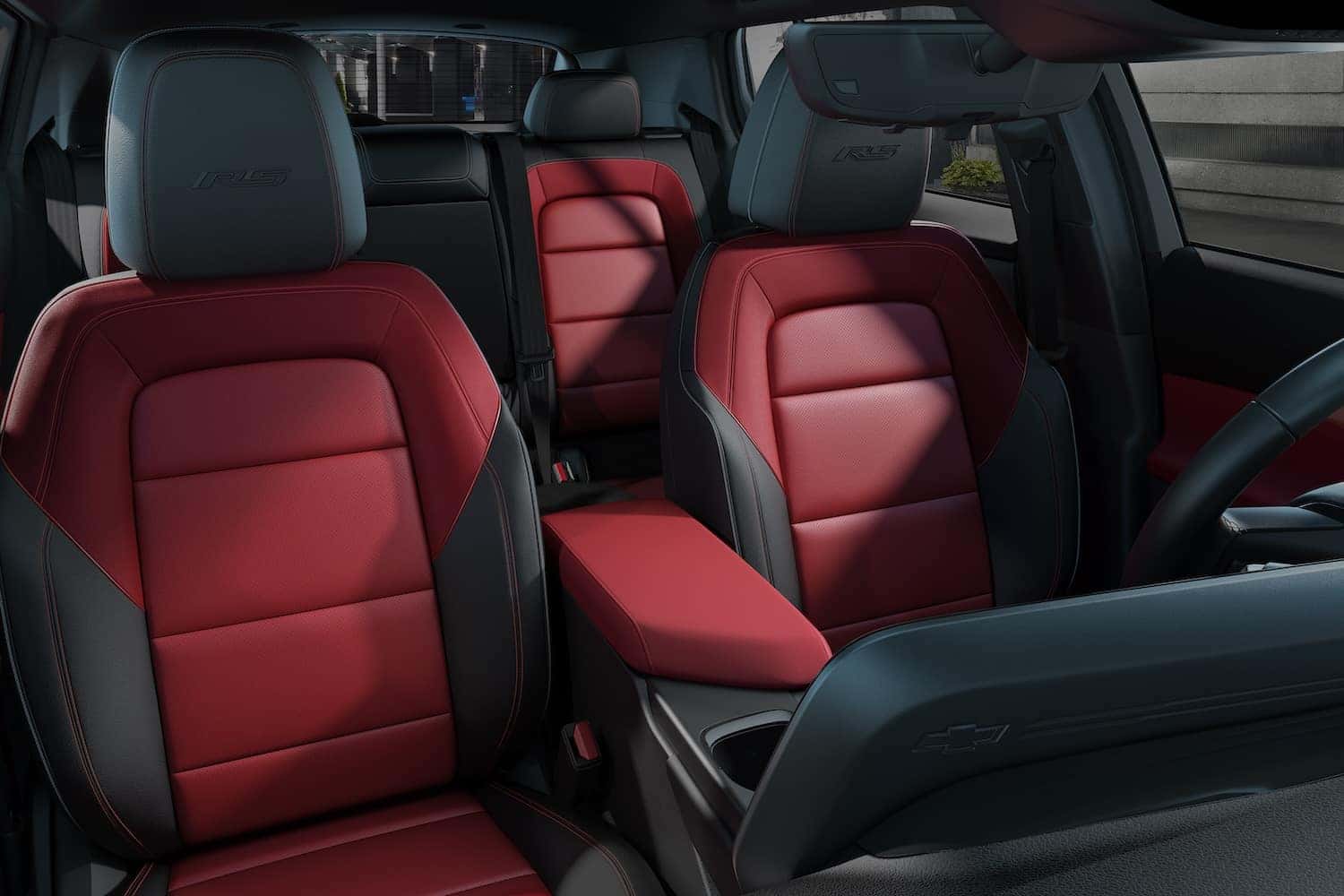
The models have distinctly different ride and handling characteristics. Car and Driver found the ID.4 to have a firmer suspension, which gives it a sporty feel, though possibly to a fault, as they describe its steering as “a tad darty on the highway.” They also found the brakes to lack feel. The Equinox EV feels like the bigger vehicle that it is, with a suspension that “filters out more road irregularities” for a smoother ride, if less lively on twisty roads.
Charging Rates and Hands-Free
When it comes to longer drives, the Equinox EV is available with GM’s SuperCruise system that offers true hands-free driving on mapped highways, which will be up to 720,000 miles worth by the year’s end. The ID.4 has no such system, though it, like the Equinox, does have adaptive cruise control and lane-keeping systems. Regarding charging over the road, the VW’s smaller battery and faster maximum charge rate had an advantage of charging from 10% to 90% in 37 minutes, compared to 51 minutes for the same in the Equinox. However, that won’t make much of a difference if you stop to eat while you charge.
Different Approaches to the Instrument Panel
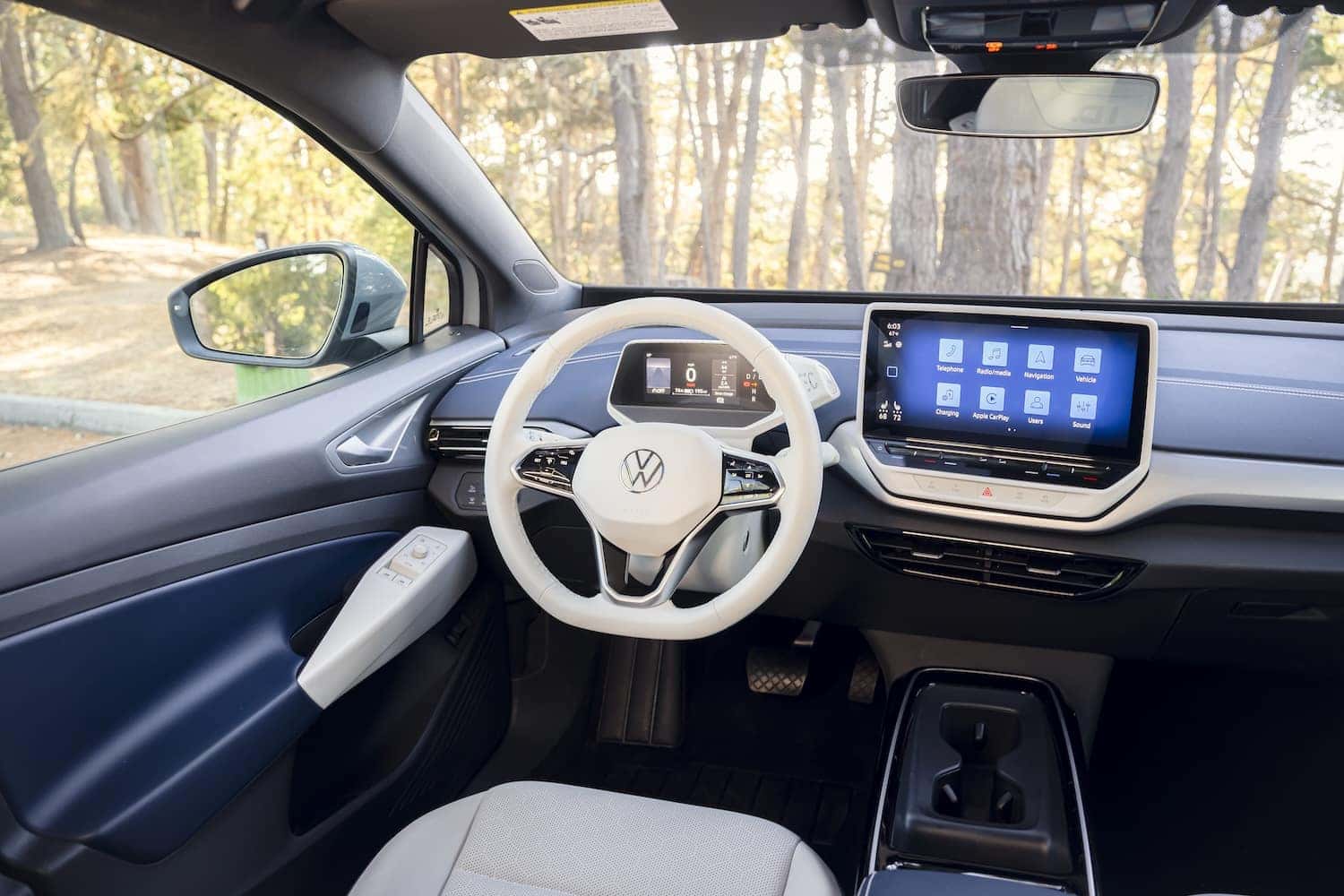
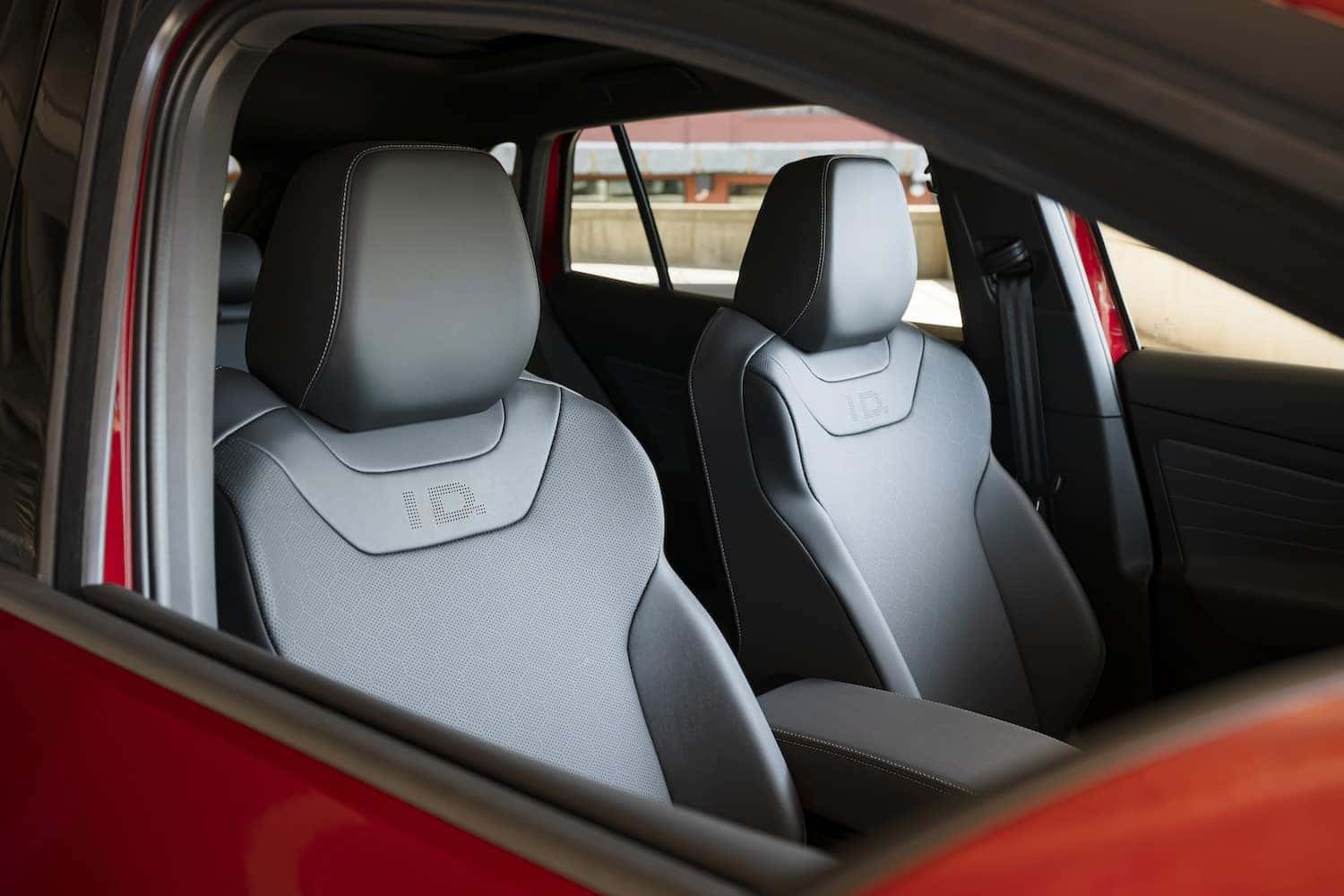
The ID.4’s instrument panel is a bit on the sparse side. The driver’s information display is just a little larger than a smartphone on its side. The 12.9-inch center screen sticking up in the middle of the dash is large enough, which is good because it has to handle nearly all of the climate controls and everything else. It also has a few quirks, the most notorious being the driver’s window controls, of which there are only two, plus a switch to activate the front or rear windows. Requiring two actions to lower the windows to reduce the controls from four to three seems silly to many.
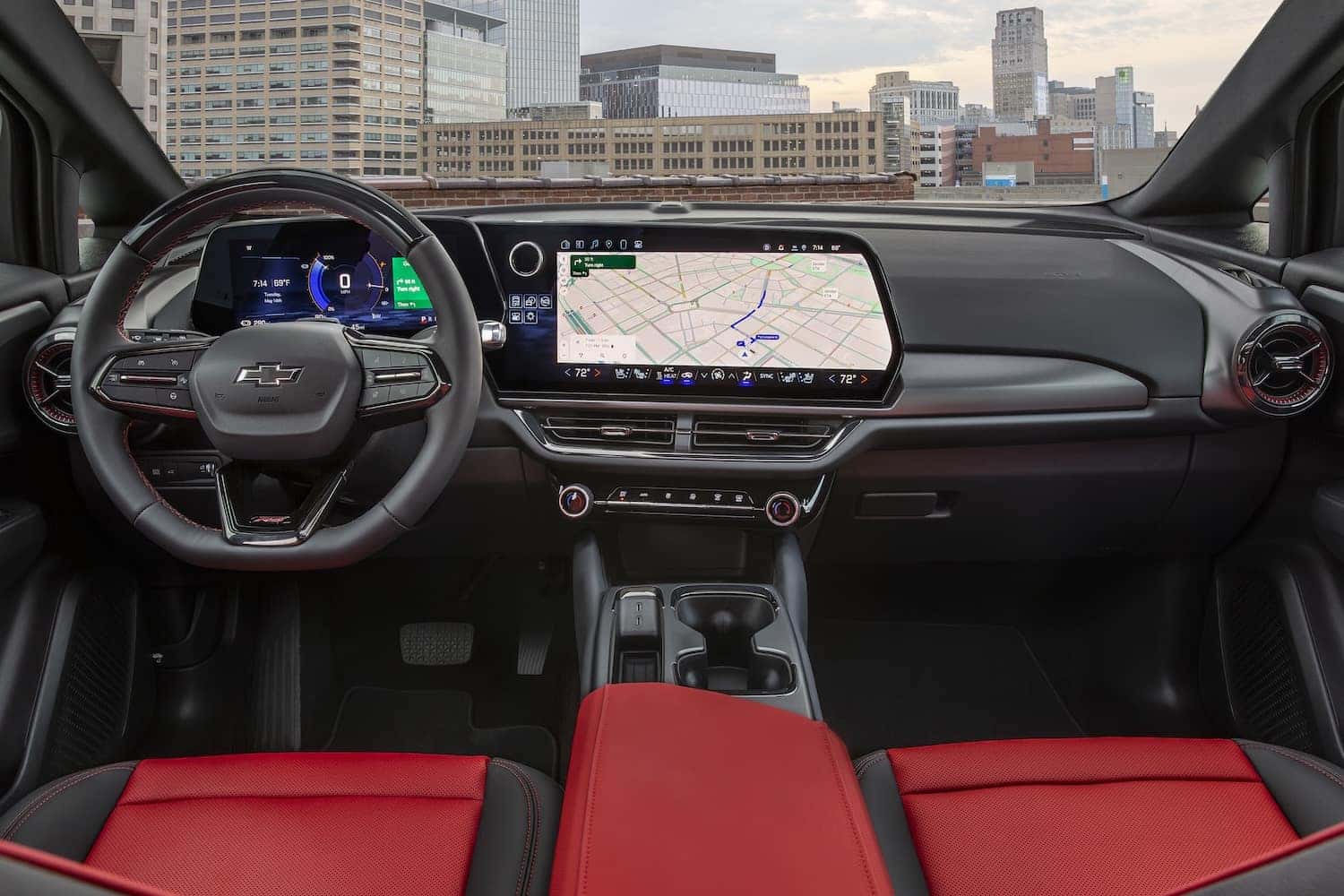
The Equinox is a bit more conventional in its instrument panel layout. It also has a digital driver gauge cluster, filling the space through the upper half of the steering wheel. Its housing connects to the very large 17.7-inch touch screen, below which is a complete set of physical controls for the climate control system, and there is a prominent knob for volume control.
What They Will Cost You
The entry point for an Equinox EV is the 2LT eAWD, with a starting MSRP of $46,595. There are four trim levels, topping off with the 3RS eAWD, with a starting MSRP of $50,095. The ID.4 starts a little higher, with the lowest-price AWD model being the AWD Pro, which has a starting MSRP of $48,755. The model range climbs to the AWD Pro S, which starts at $53,875.
Both models have strengths, but for families, the smoother-riding Equinox EV with the superior instrument panel may well be your choice. As is the case with all EVs, they are best when you can charge them at home. A visit to Twin Falls Chevy can not only get you an Equinox test drive, but we also have information that can help you select a home charger and have it installed.
0 comment(s) so far on Equinox EV vs VW ID.4