


J.D. Power Compares the Tahoe and Jeep Wagoneer
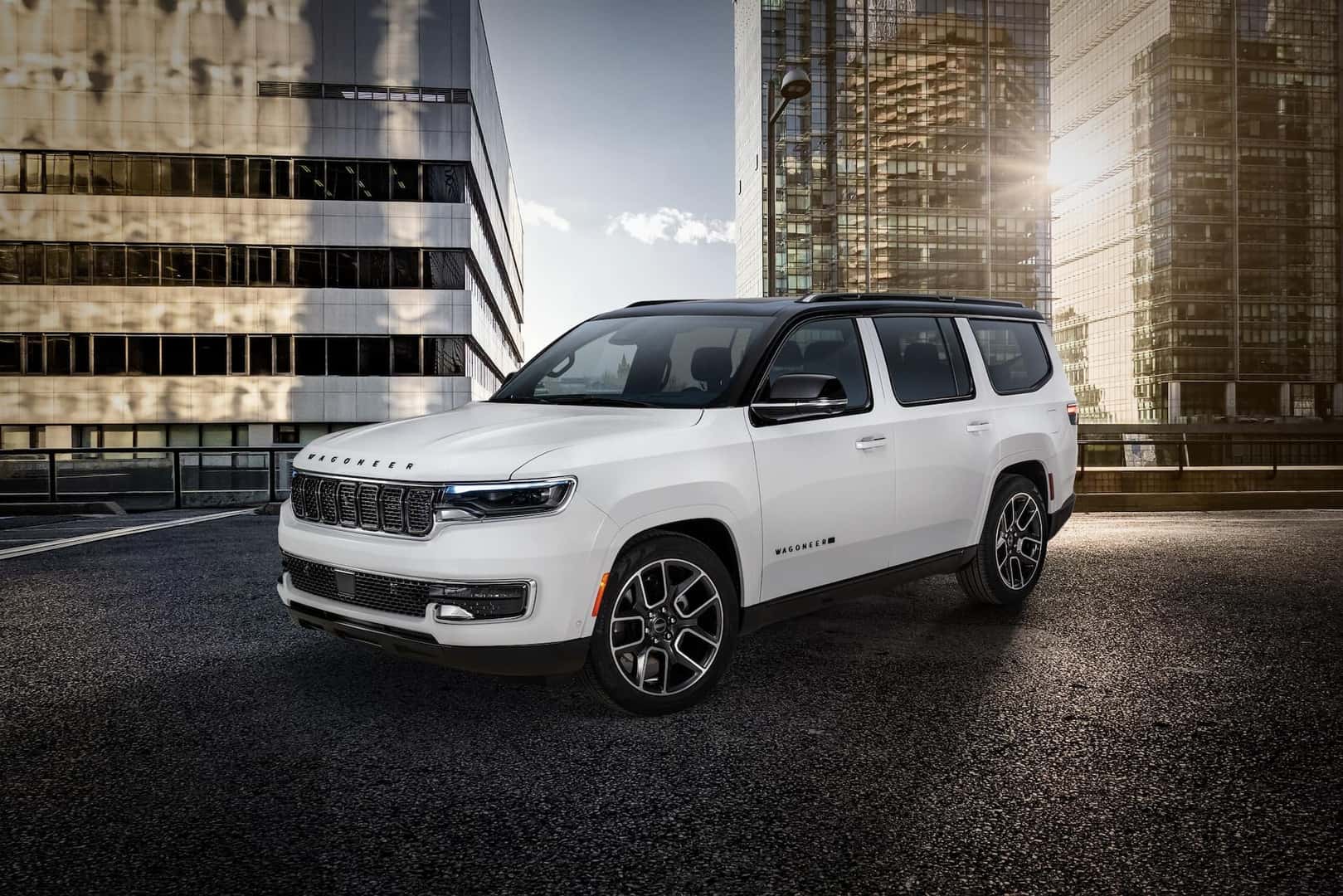
Unlike compact or mid-size crossovers, full-size truck-based SUVs form a much smaller segment. The entry of just one new model is likely to attract attention. The long-standing leaders of this segment are the Tahoe and Suburban. The Suburban has been around for 90 years and is the oldest continuously used nameplate in the industry. The Tahoe, which is simply a shorter version of the Suburban, hasn’t been around as long, but still claims 35 years with the 2026 model year. The newest player is the Jeep Wagoneer. Its name dates to 1963, but that model disappeared the same year the Tahoe was introduced. Although the name has been used on various Jeep models over the years, 2022 marked its return as a full-sized SUV designed to compete with the Tahoe. Meanwhile, the longer Wagoneer L is aimed at the Suburban.
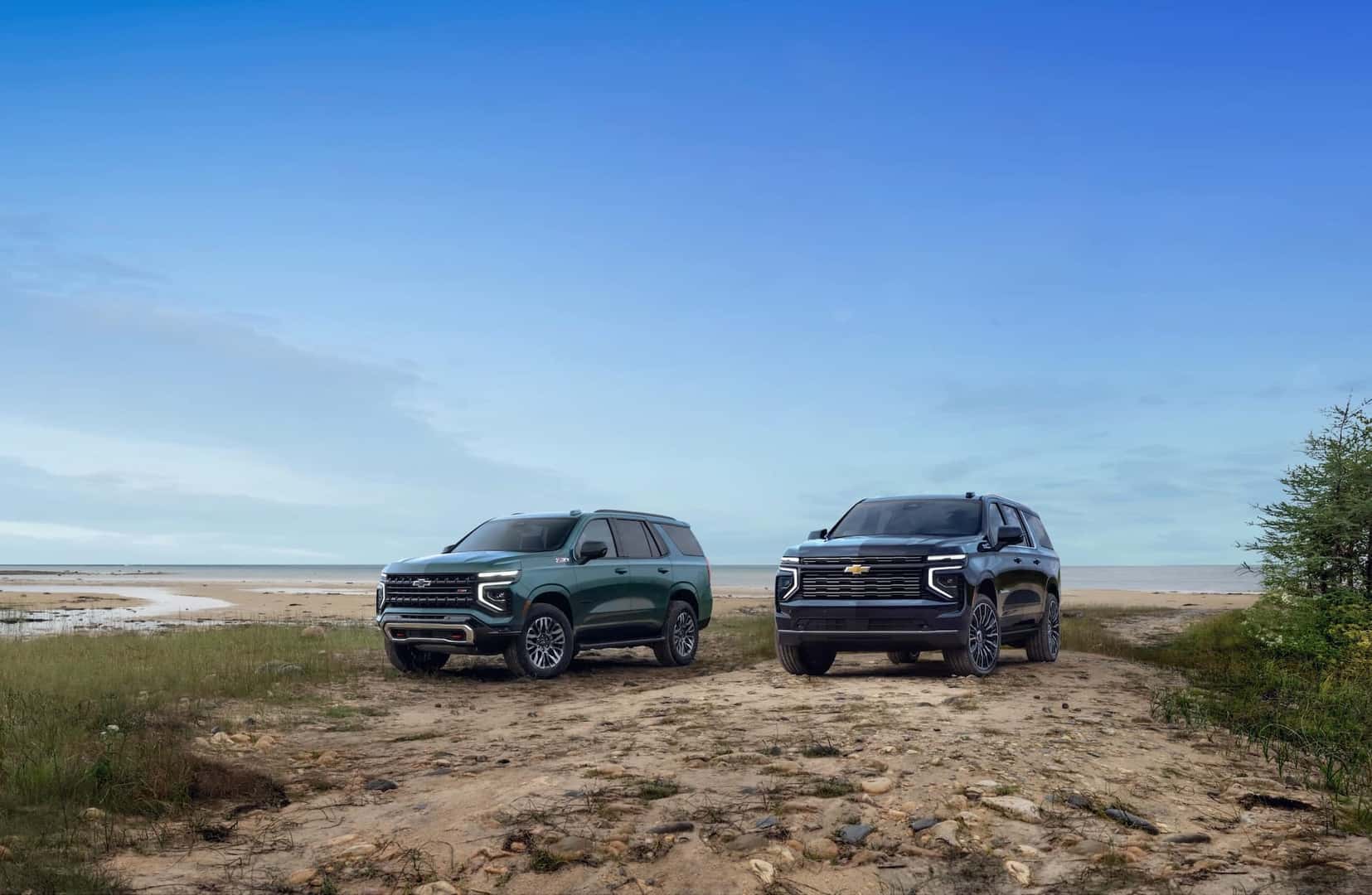
J.D. Power conducted a comparison between the Wagoneer and Tahoe, with the implicit understanding that all statements, except cargo space figures, also apply to the Wagoneer and Suburban. Twin Falls Chevrolet recounts their main findings, which may hint at how things turned out.
J.D. Power divided its review into the following categories:
- Price and Value
- Reliability and Quality
- Performance, Efficiency, and Utility
- Safety and Driving Assistance
- Infotainment and Technology
- Independent Expert Opinion
At the end of each segment, they state which vehicle has the advantage, and we will spoil the ending right now by stating that while a couple of categories ended in a draw, the Tahoe had the advantage in all the others. In other words, the Wagoneer didn’t win a single category.
Price and Value
Both models have remarkably similar starting MSRPs. The Tahoe starts at $61,195 for the base 2WD LT and has a six-grade model line that ends with the 4WD High Country with a starting MSRP of $83,895. The Wagoneer starts at $62,040 for a 2WD (unnamed) base model and has a five-grade model line that ends with the 4WD Series III at $79,040. It should be noted that Jeep also markets a Grand Wagoneer (with an L variant) that is the same core model but upgraded to compete with the Land Rovers and other luxury-brand SUVs worldwide. This may be why the top Wagoneer stops short of Tahoe on the high end. J.D. Power found the pricing and basic features similar enough to call this a draw.
Reliability and Quality
This, of course, is J.D. Power’s specialty, and they immediately refer to the fact that the Tahoe has the highest rank in their large SUV segment both on their Initial Quality Study and Vehicle Dependability Study, which looks at owner issues after three years of ownership. In contrast, the Wagoneer did not reach the top three in either study, and thus, the Reliability and Quality advantage goes to the Tahoe.
Performance, Efficiency, and Utility
The Tahoe offers a choice of a 5.3-liter V8, a 6.2-liter V8, and a 3.0-liter inline-6 turbodiesel. All Wagoneer models are equipped with a twin-turbocharged 3.0-liter inline-six that delivers 420 horsepower and 468 lb-ft of torque. These figures closely match those of the Tahoe’s optional 6.2-liter V8, which also produces 420 horsepower and 460 lb-ft of torque. All of Tahoe’s engines are paired with a 10-speed automatic transmission, while the Wagoneer features an 8-speed transmission.
The Wagoneer has a fuel economy advantage among similarly powered engines. With 4WD, the Jeep has city/highway/combined figures of 16/23/19 compared to 14/18/16 for the 6.2-liter V8. It also has a higher towing capacity (8,100 vs. 10,000 lb.). Additionally, the Wagoneer offers three different 4WD systems, although it’s debatable how much that matters on vehicles of this size.
The Tahoe provides slightly less space behind the third-row seat (25.5 vs. 27.4 cubic feet), but surpasses the Wagoneer once you start folding seats, with 72.5 vs. 70.8 cubic feet with the third seat down and 122.7 vs. 116.7 cubic feet in full cargo mode. This pattern continues with their larger counterparts, where the Suburban is just slightly under the Wagoneer L behind the third row (41.5 vs. 42.1 cubic feet), but far exceeds it with the third row folded (93.8 vs. 85.3) and with all seats folded down (144.5 vs. 130.9).
J.D. Power declared this section a draw, citing the Tahoe’s powertrain options vs the Wagoneer’s better MPG with comparable power.
Safety and Driving Assistance
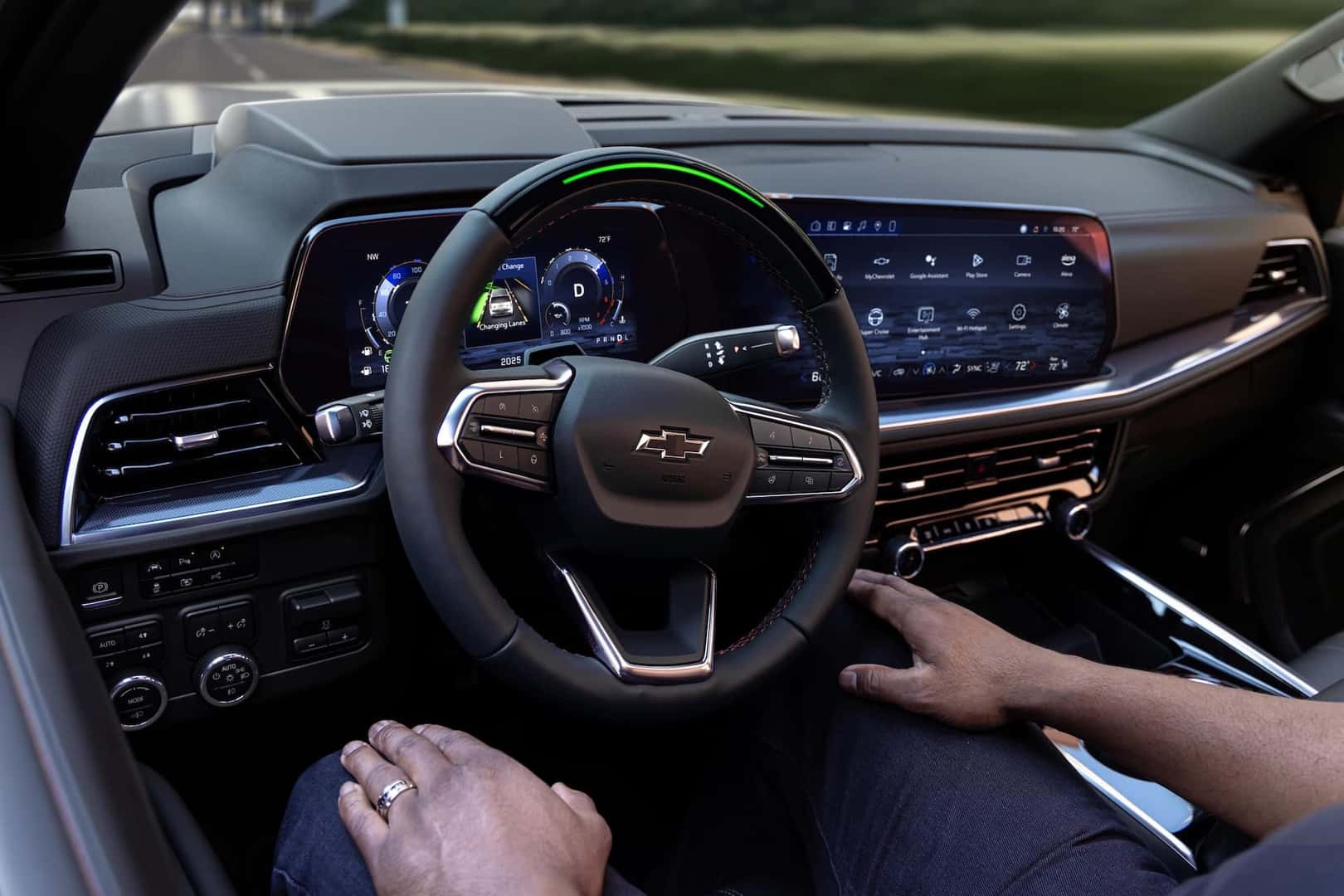
J.D. Power notes that both models offer a long list of safety technologies. They highlight that the Wagoneer bundles driver assistance features like adaptive cruise control and traffic sign recognition in an optional package, whereas these are standard on the Tahoe. Additionally, the Tahoe has the advantage of the available Super Cruise hands-free highway driving system, which the Wagoneer has nothing of the kind. For these reasons, they gave the Tahoe the advantage.
Infotainment and Technology
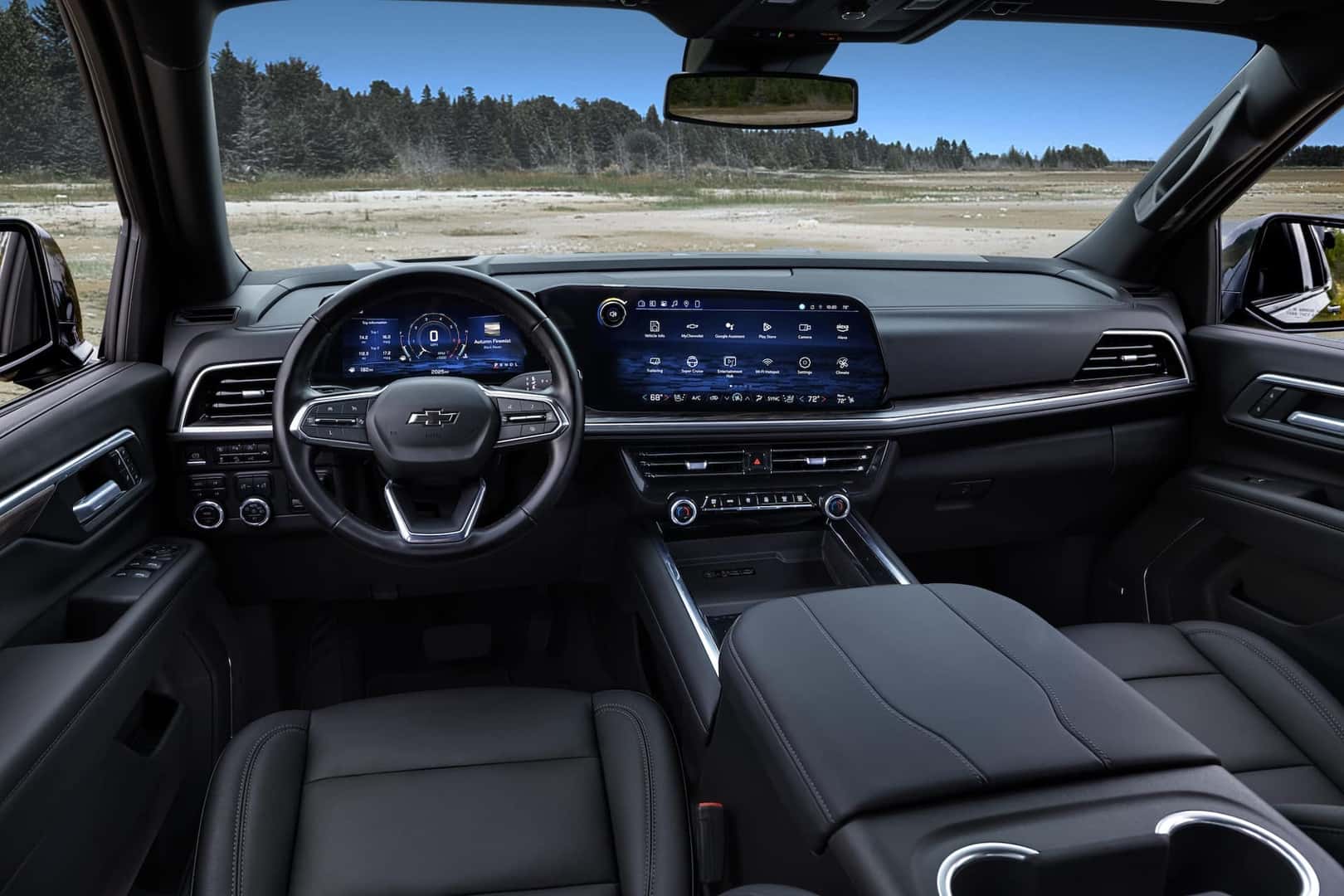
The Tahoe features a standard digital driver’s display and a 17.7-inch center touchscreen, powered by the Google Built-in system, which includes on-board Google Maps and the Google Assistant’s natural voice command system, as well as wireless smartphone compatibility. The Wagoneer’s in-house Uconnect 5 is also quite sophisticated. The Wagoneer offers up to 40 inches of total screen space, though the center touchscreen itself is much smaller at 10.1 inches. They were impressed by Tahoe’s eight years of complimentary OnStar services and the sophistication of the available trailering camera system with up to 13 views. The Wagoneer provides three complimentary years of connected services, such as remote engine start and door locking. Additionally, the Wagoneer offers extensive information about off-road trails in its navigation system, although this may not be as relevant for a vehicle of this size. J.D. Power gave the Tahoe the advantage for its longer complimentary connection features and more advanced towing technology.
Independent Expert Opinion
This general overview highlights the Tahoe’s independent rear suspension and other chassis features that enhance the overall ride. It notes that the Tahoe’s interior can be quite luxurious, with rear wood accents and perforated leather. The larger touchscreen is also seen as a benefit, although the Wagoneer offers a second touchscreen for the front passenger. They sum it up this way: “The Jeep Wagoneer offers many appealing features, but the tried-and-true Chevy V8s and impressive vehicle quality and dependability tip the comparison in the Tahoe’s favor.”
The Wagoneer makes a solid effort and has an impressive engine, but the Tahoe and Suburban have been refining their details for the full-size SUV market for decades, making it hard to rival that experience. If you’re looking for a large vehicle to carry your family and tow your gear, visit Twin Falls Chevrolet for a test drive of the Tahoe or Suburban.
0 comment(s) so far on J.D. Power Compares the Tahoe and Jeep Wagoneer