


Towing 101
Towing is an important part of many people’s lives in this Idaho region, whether it serves as a functional aspect of business or enhances weekends spent camping, fishing, or leisurely boating on your favorite lake. It allows you to take your recreational vehicles like dirt bikes, ATVs, snowmobiles, or other toys out for a day or weekend of fun.
It is so common out here that it may look like just a small step beyond knowing how to drive. But looks can be deceiving, as towing is a learned skill that benefits significantly from learning in advance, knowing your numbers, planning ahead, and always being safety-conscious. If towing is new to you or there are a few details you need to brush up on, Twin Falls Chevrolet created this blog post to supply some of the basics of towing. It isn’t comprehensive; you could write a whole book on the subject, and people have. While gooseneck and fifth-wheel options also exist for towing, this post will concentrate on traditional hitch towing.
Your Tow Vehicle
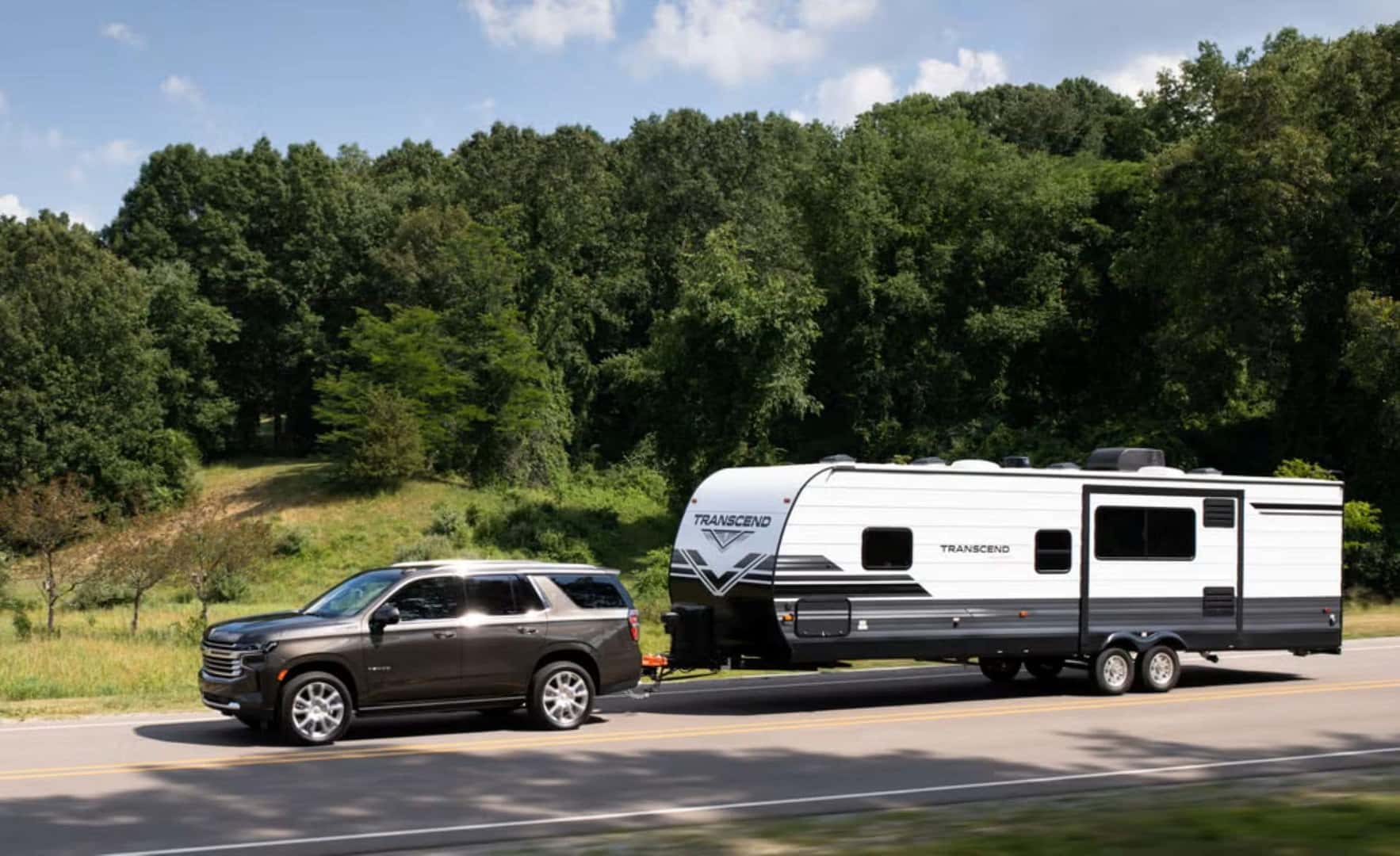
The first thing to consider is what vehicle will do the towing. It was just a generation or two ago that nearly all cars had rear-wheel drive, body-on-frame construction, and large, under-stressed six- and eight-cylinder engines that could tow at least a moderate-sized trailer.
Today, nearly all passenger cars and most crossover SUVs feature unibody construction, where much of the body—including the pillars, roof, and both the upper and lower body—makes up the chassis. This structure facilitates weight reduction, enhances efficiency, and provides a comfortable ride, but it limits towing capacity since the entire body bears the stress of pulling a trailer. This is not to say that such vehicles can’t tow; however, their capacities will be lower than those of vehicles with body-on-frame construction, including full-size pickup trucks like the Silverado, mid-size pickup trucks like the Colorado, and large truck-based SUVs like the Tahoe and Suburban.
Important Towing Figures
It is easy to find your vehicle’s maximum tow rating in its basic specification list, but knowing that and your trailer’s weight isn’t enough information. You must also take into account everything you load in the trailer and how much you load your tow vehicle as well, including both cargo and passengers. The following are a few of the terms and figures that should be known by anyone who tows.
Gross Vehicle Weight Rating (GVWR)—The GVWR indicates the maximum allowable weight of a fully loaded vehicle, including liquids, passengers, cargo, and the kingpin or tongue weight of any attached trailer. This rating is displayed on the certification label, typically located near the driver-side door. For some late-model vehicles, this information may also be found on the Trailering Information label. The GVWR primarily considers the weakest elements among the load-bearing components, such as the frame, axles, springs, brakes, wheels, and tires. Manufacturers determine the GVWR.
Trailer Weight Rating (TWR)—This represents the maximum allowable weight of a loaded trailer for a specific model of tow vehicle and hitch type, as determined by the manufacturer of the tow vehicle.
Gross Combination Weight Rating (GCWR)—GCWR refers to the maximum weight that both the tow vehicle and trailer can safely weigh together. You’ll find the GCWR in the owner’s manual or the vehicle brochure for your model, which is typically available from the dealership. Newer vehicles may feature a Trailering Information label that indicates the GCWR. GCWR is based on the assumption that both the tow vehicle and trailer have functioning brakes. Basically, any trailer weighing 1,500 pounds or more should have its own on-board brakes.
Tongue Weight (TW)—This refers to the vertical load applied to a hitch. For most applications, it should range from 10% to 15% of the trailer’s TWR.
As you can see, if you plan to tow a camping trailer loaded with supplies or a boat with cargo inside, you need to consider the weight of the fully loaded trailer. If you are also bringing along plenty of cargo in your tow vehicle, that must also be factored in. If you are still in the decision-making stage, it’s wise to overestimate all weights. Unless you weigh everything before it’s loaded into your trailer or tow vehicle, you will have to make quite a few ballpark estimates. It’s best to take your fully loaded vehicle and trailer to a vehicle scale to determine the overall weight. You will find these at truck stops just outside of town on Highways 30 and 93.
Weight Distribution
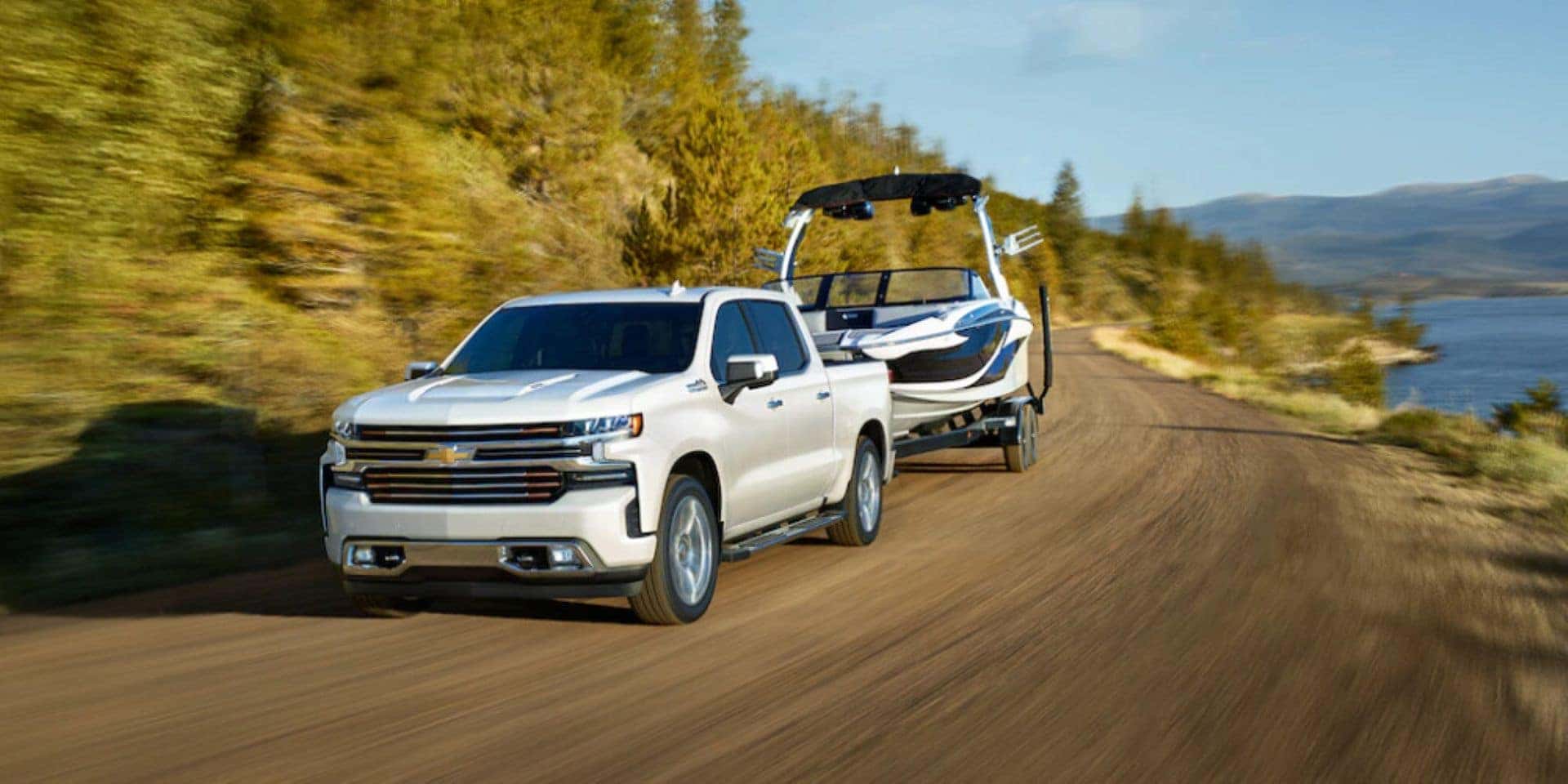
In addition to knowing the weight added to your trailer, you must also take care in how the weight is distributed. The biggest mistake is overloading the rear of the trailer, which makes it tail-heavy. This can lead to swaying, which can result in instability with disastrous consequences. Remember the 60/40 rule, which indicates that 60% of the weight should be in front of the trailer axle, while 40% should be at the rear. However, placing too much weight at the very front of the trailer can excessively increase your tongue weight, which should be 10% to 15% of the trailer’s total weight.
For smaller trailers, you can weigh tongue weight by placing the trailer tongue on a bathroom scale. For larger trailers, a vehicle scale is required. For heavier trailers, a weight-distributing hitch can help evenly distribute weight between the tow vehicle and the trailer, thereby reducing strain on the tow vehicle’s suspension and improving stability.
Trailer Leveling
Your trailer should ride level from front to rear. The rear bumper of the trailer shouldn’t point downward, and conversely, there should be no sagging at the hitch. To relieve sag, start by shifting cargo away from the front of the trailer. If that doesn’t help, your tow vehicle may be unsuitable for the task or may need adjustments to the rear suspension.
Most trailer hitches are designed to attach at level angles to the trailer tongues. However, if your vehicle is lifted or if there is any other reason the hitch is not at the correct height to keep the trailer level, you will need a hitch with height-adjustment capabilities.
Trailer Brakes
As mentioned, if a trailer’s loaded weight exceeds 1,500 pounds, it requires its own braking system. There are electric and surge brake systems available. Electric brakes connect to the tow vehicle, enabling the vehicle’s brakes to signal the trailer to activate its brakes. Typically, they include a panel in the cabin that allows the driver to adjust the intensity of trailer braking. Surge brake systems use sensors at the hitch and rely on the trailer’s forward inertia to engage the brakes. Surge brakes are simpler, require no wiring or controller, and are ideal for marine trailers, while electric brakes offer more control and are commonly used on RVs and utility trailers.
Trip Preparation
You should have a checklist before you embark on your trip, at least until it becomes second nature. Included on the list should be:
- Checking your lights’ connections each time you hook up your trailer. This requires an assistant behind the trailer to verify that your brake lights, taillights, turn signals, and backup lights are all functioning correctly.
- Make sure your safety chains are crossed and connected.
- Check to make sure all trailer jacks have been pulled up.
- Remove any chocks you may have had to keep the trailer in place.
While Towing
Although it is a good rule for any form of driving, it is essential that all driving is smooth and steady when towing a trailer. Any quick actions reverberate between the two vehicles and reduce stability. Braking distances will be longer, so look farther down the road and start braking sooner. Before passing on the highway, keep in mind:
- Your vehicle’s acceleration will be slower.
- Your passing distance is at least twice as long.
- Your vision of the distance between you and the passed vehicle is difficult to gauge.
Understand from the outset that driving will be slower. Regardless of the general speed limit, towing speed limits on highways and freeways typically range from 55 to 65 mph. What matters most is what is safe for you. If your trailer’s weight is significantly higher than that of your tow vehicle, speed can indeed increase instability. If you notice trailer sway at 55-65 mph, don’t brake; instead, decelerate calmly until the sway stops, and consider adding an anti-sway bar to your hitch. If you have a heavy vehicle, like a full-size SUV or HD pickup towing a lightweight trailer, you can generally drive more confidently and safely, all other conditions being equal.
When heading up inclines, just assume you will be doing it slowly and aim for the right lane. When heading downhill, don’t rely on your brakes to modulate speed, as this will heat them up and reduce their effectiveness. Instead, use engine braking by shifting to lower gears.
Reversing While Towing
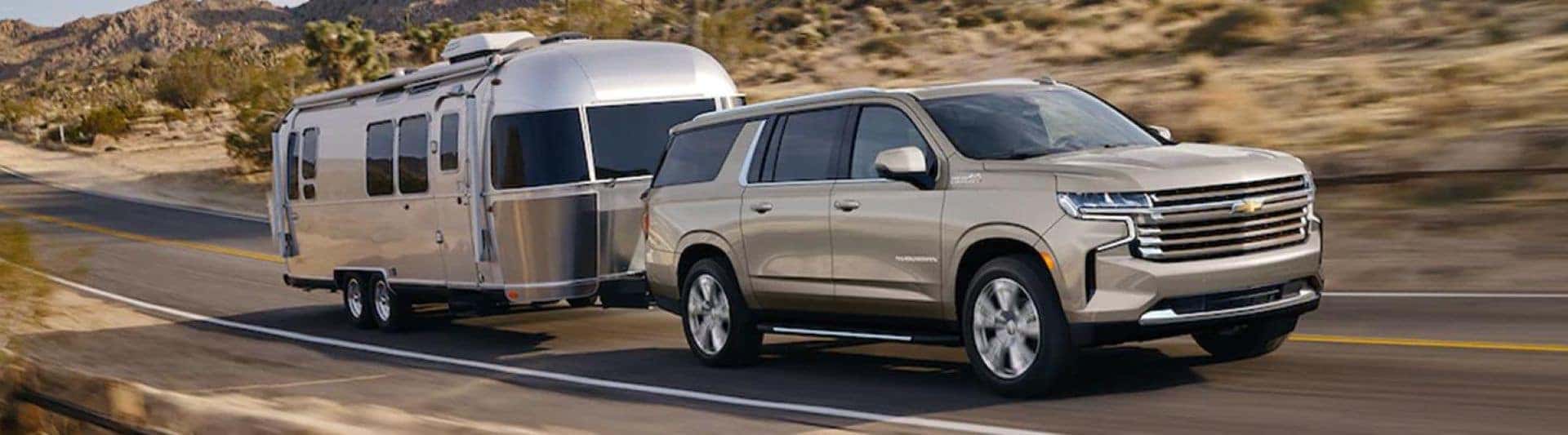
It is a challenge and takes practice, particularly when it requires turning. Generally, you start by steering your tow vehicle in the opposite direction of where you want the trailer to go. This will pivot the trailer toward your destination. At a certain point, you reverse your steering direction to guide your trailer to its final position, making minor corrections along the way. Remember that whatever adjustments you make via the tow vehicle, the trailer will adjust in the opposite direction. Trailers of all sizes have their challenges. Shorter trailers are more sensitive to steering changes; longer trailers are harder to gauge positionally.
If you had a view from above, it would be much easier. Instead, you are in the driver’s seat, either twisted around or using your mirrors to gauge the trailer’s angle.
Here are some useful tips for backing a trailer into a campsite. This scenario presents challenges because trailers are difficult to see around and campsites often consist of narrow, unfamiliar spaces typically surrounded by obstructions such as trees, picnic tables, and fire pits.
- If possible, always try to approach the location so that the site is on the driver’s side. This enables you to quickly survey the area for any obstructions, and you will have an unobstructed view through your driver-side window of the trailer as it turns into the site.
- With the destination on the driver’s side, position the vehicle on the left side of the road, opposite to where you would normally be. This allows plenty of room on the passenger side, as both the back of your tow vehicle and the front of the trailer will initially swing out in that direction. Moments later, the front of your tow vehicle will also swing in that direction, so you want to ensure there is enough space.
- Pull forward until the back of your trailer is just on your side of the site entrance. This will help you begin your turn with a lower risk of the trailer extending too far beyond the edge of the site on the opposite side, which is out of your view.
- If you have passengers, appoint one (and only one) to help guide you. Determine your commands and gestures in advance. Walkie-talkies or cell phones can also facilitate communication. Have the spotter position himself or herself on the passenger side, at the far end of the site entrance, to assist you with areas you cannot see. Once the trailer is about halfway into the site, stop and have him or her move to the back of the camp spot on the passenger side that you cannot see to help guide you the rest of the way and inform you when to stop.
- Some drivers use the trick of holding the bottom of the steering wheel when reversing with a trailer. This way, if they want the trailer to go left, they move their hand to the left, and vice versa.
If the tow vehicle or trailer is new to you, practicing in an empty parking lot is often worth your time. Just know that once you master this, parallel parking will be a breeze in comparison.
Conclusion
Safety and preparation are constant themes in successful towing. Take it seriously and become an expert in all the details. With experience, you will find yourself towing safely and confidently. If you visit Twin Falls Chevrolet looking for either a new or used tow vehicle, be sure to discuss your towing plans with your sales professional to help guide you toward the most suitable vehicle for your needs. When purchasing a trailer, ask the seller as many questions as possible.
0 comment(s) so far on Towing 101